AI

6 articles

WhatsApp Marketing for Restaurants
AI

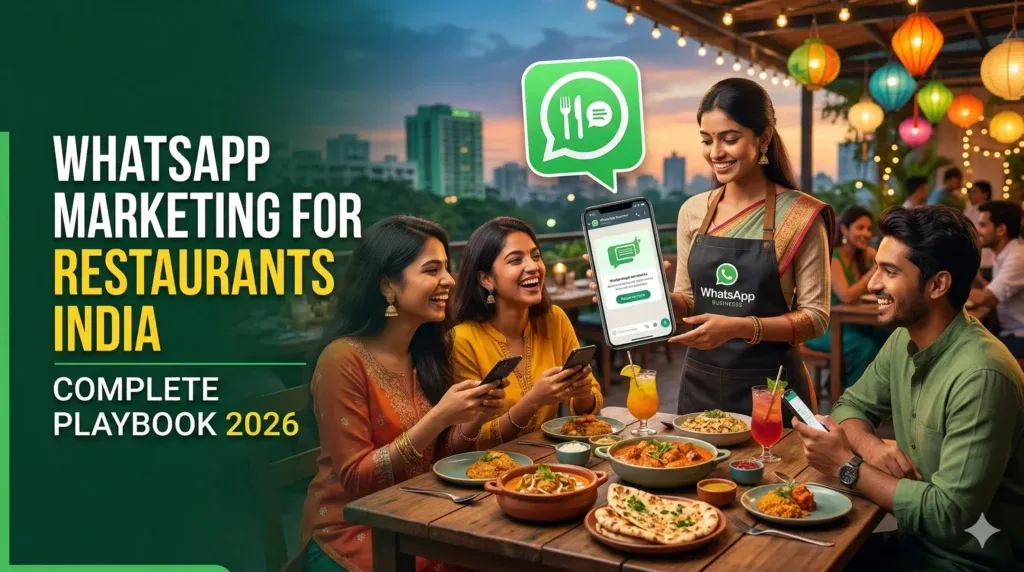
WhatsApp Marketing for Restaurants India – Complete Playbook 2026

India has over 500 million active WhatsApp users, and the average Indian checks WhatsApp 23 times a day. For restaurant owners, this presents an unmatched opportunity: direct access to customers on the one app they never ignore. Traditional restaurant marketing, newspaper ads, Zomato promotions, and SMS blasts are losing effectiveness. Zomato and Swiggy take 20-30% commission on every order. SMS open rates have dropped below 10%. Email marketing barely works in the Indian restaurant context, where most diners never share their email. WhatsApp marketing changes the equation entirely. With 85-95% open rates, near-instant delivery, and the ability to send rich media (images, videos, PDFs, location pins), WhatsApp lets restaurants build direct relationships with their customers, no middleman, no commission, no algorithm deciding who sees your message. This comprehensive playbook covers everything you need to know about WhatsApp marketing for restaurants in India: from setting up WhatsApp Business API to running broadcast campaigns, integrating loyalty programs, filling empty tables on slow days, and measuring ROI. Whether you run a single outlet or a 50-location chain, this guide gives you the exact strategies that top Indian restaurants use to generate 3-5x returns on their WhatsApp marketing spend. KEY TAKEAWAY Indian restaurants using WhatsApp marketing report 40% higher repeat visit rates, 85-95% message open rates, and 3-5x ROI compared to traditional SMS and email marketing. The combination of WhatsApp + loyalty programs is the most powerful retention strategy available to Indian restaurants today. 1. The State of Restaurant Marketing in India (2026) The Indian food service industry is valued at over INR 5.99 lakh crore (USD 72 billion) and growing at 9% annually. Yet most restaurants operate on razor-thin margins of 8-15%, making efficient customer acquisition and retention critical to survival. 1.1 The Problem with Current Marketing Channels Channel Open Rate Cost per Reach Commission Limitation Zomato/Swiggy Ads — INR 15-40/click 20-30% No customer data ownership SMS Marketing 5-10% INR 0.15-0.25/SMS None DND restrictions, no rich media Email Marketing 12-18% INR 0.50-1.50/email None Low email adoption in India Instagram/Facebook 2-6% INR 5-20/reach None Algorithm-dependent reach WhatsApp Marketing 85-95% INR 0.30-0.80/msg None Requires opt-in (advantage) The data is clear: WhatsApp delivers 8-15x higher open rates than any other channel while keeping costs comparable to SMS. The opt-in requirement, often seen as a limitation, is actually an advantage — it means your audience is pre-qualified and genuinely interested in hearing from you. 1.2 Why WhatsApp Works for Indian Restaurants India-specific factors make WhatsApp uniquely powerful for restaurant marketing. First, WhatsApp is the default communication app — unlike the US or Europe where email dominates business communication, Indian consumers expect businesses to communicate via WhatsApp. Second, the rich media capabilities allow restaurants to send mouth-watering food images, video tours, PDF menus, and location pins — something SMS cannot do. Third, the two-way nature of WhatsApp creates genuine conversations, building the kind of personal relationships that drive loyalty in Indian dining culture. 2. Setting Up WhatsApp Marketing for Your Restaurant 2.1 WhatsApp Business App vs WhatsApp Business API The first decision every restaurant must make is choosing between the free WhatsApp Business App and the paid WhatsApp Business API. Here is how they compare: Feature WhatsApp Business App (Free) WhatsApp Business API Cost Free INR 0.30-0.80 per conversation Broadcast Limit 256 contacts per list Unlimited Automation Basic auto-replies Full chatbot + workflow automation CRM Integration None Full CRM, POS, loyalty integration Multiple Users Up to 4 devices Unlimited team members Analytics Basic message stats Detailed delivery, read, click reports Green Tick Verification Not available Available (builds trust) Best For Single outlet, <500 customers Multi-outlet, 500+ customers For restaurants with fewer than 500 regular customers and a single location, the free WhatsApp Business App is a good starting point. However, once you cross 500 customers or want to automate campaigns, the WhatsApp Business API becomes essential. Platforms like Waakif provide WhatsApp Business API access along with built-in loyalty programs, making setup seamless. 2.2 Building Your WhatsApp Contact List The foundation of WhatsApp marketing is your contact list. Unlike SMS, where you can buy numbers, WhatsApp requires explicit opt-in, which means every contact is genuinely interested. Here are proven methods Indian restaurants use to build their list: QR Code on Tables and Receipts: Place a WhatsApp QR code on every table tent, receipt, and menu. When customers scan it, they are automatically added to your WhatsApp list and receive a welcome message with a first-visit discount. This is the highest-converting method; restaurants using Waakif QR menus see 25-35% of diners opting in during their first visit. Checkout Opt-in: Train your billing staff to ask “Would you like to receive exclusive offers on WhatsApp?” during checkout. Combine this with an instant reward (10% off next visit) to boost opt-in rates to 60-70%. WiFi-Gated Opt-in: Offer free WiFi in exchange for WhatsApp number registration. This method works especially well for cafes and casual dining restaurants where guests spend 30+ minutes. Social Media Funnel: Use your Instagram bio link and Facebook CTA buttons to direct followers to your WhatsApp. Run “Message us on WhatsApp for a secret menu item” campaigns to drive opt-ins from social followers. 3. The 5 Core WhatsApp Marketing Strategies for Restaurants 3.1 Broadcast Campaigns Broadcast campaigns are the backbone of restaurant WhatsApp marketing. These are one-to-many messages sent to your entire customer list (or targeted segments) promoting new dishes, special offers, events, or seasonal menus. The key to effective broadcasts is segmentation and timing. Best practices include sending broadcasts between 11:00-11:30 AM (pre-lunch decision window) or 5:30-6:00 PM (pre-dinner), limiting frequency to 2-3 broadcasts per week maximum, personalizing with the customer name and their last order, and always including a clear call-to-action like “Reply 1 to reserve a table” or “Show this message for 15% off.” 3.2 Loyalty Program Integration The combination of WhatsApp messaging and a digital loyalty program is arguably the most powerful retention tool available to Indian restaurants. When a customer earns loyalty points, they receive an instant WhatsApp notification: “Hi Rahul! You earned
Waakif
AI

Creator Account on Instagram: 5 Best Way to Grow Faster

If you want to grow your audience, attract brand deals, or monetise your influence, switching to a creator account on Instagram is one of the smartest moves you can make. It provides access to advanced analytics, enhanced messaging tools, and exclusive features specifically designed for creators. Let’s break it down step by step. What is a Creator Account on Instagram? A creator account is one of Instagram’s professional profile types (the other is a business account). It’s made for influencers, artists, educators, and public figures who focus on personal branding and content creation. Alongside Instagram, they have an Official Creator Instagram Account to promote reels and the creators’ community. Unlike a personal profile, it unlocks analytics, branded content tools, and insights you can use to grow. Features of Instagram Creator Accounts Here’s what you get when you switch: Advanced insights – See reach, impressions, and follower growth. DM filtering – Organise messages into Primary, General, and Requests. Branded content tools – Tag sponsors and manage partnerships. Category options – Display “Coach,” “Artist,” “Digital Creator,” etc. Growth tracking – Daily follow/unfollow stats. Content scheduling – Schedule posts via Creator Studio. Creator Account vs Business Account Business accounts are for companies and organisations. They emphasise ads, commerce, and team access. Creator accounts are for individuals. They emphasise personal growth, influencer tools, and audience insights. If you’re a brand selling products, go into business. If you’re a person building influence, go creator. Why Switch to a Creator Account? Instagram is investing heavily in creators. Most new monetisation tools like Reels bonuses, subscriptions, and the Creator Marketplace are designed for creator accounts. Benefits include: Higher visibility in geo-based search. AI search optimisation (profiles now show up when users type things like “best travel creators in India”). Access to the Instagram Professional Dashboard with monetisation and learning resources. Instagram Creator Studio: The Dashboard for Creators When you activate a creator account on Instagram, you can also use Instagram Creator Studio, a free desktop tool. What Creator Studio Offers: Upload and schedule posts from desktop. Track performance insights more deeply than the mobile app. Manage branded content approvals and payments. Respond to comments and DMs in one inbox. Post to Instagram and Facebook simultaneously if linked. For serious creators, Creator Studio is the planning hub that saves time and improves content strategy. How to Switch to a Creator Account on Instagram Open the Instagram app. Go to your profile > ☰ menu > Account type and controls Tap Account type and tools. Select Switch to professional account. Choose Creator. Pick a category (Artist, Coach, Public Figure, etc). Adjust contact info and profile display. That’s it, you now have a creator account. Full Video Guide on how to make a Creator Account on Instagram:  Who Should Use a Creator Account? Influencers and digital creators Artists, musicians, and photographers Coaches, trainers, and educators Podcasters, authors, and speakers Freelancers building personal brands SEO Tips to Grow with a Creator Account Use keywords in your name and bio (e.g., “Digital Creator | Fitness Coach”). Add your location for geo search. Use semantic hashtags (#InstagramCreator, #DigitalCreator, #CreatorAccount). Analyse insights weekly to refine content. Collaborate with brands for credibility. 5 Best Ways to Use a Creator Account on Instagram Once you’ve switched to a creator account on Instagram, here are the top strategies to maximize it: Leverage Creator Studio for SchedulingPlan and publish posts from desktop. This keeps your feed consistent, which is key for growth. Use Insights to Refine ContentCheck which posts bring the most reach and engagement. Double down on what works, drop what doesn’t. Optimize Your Profile for SearchAdd keywords and your location in your bio. This helps both geo search and Instagram’s new AI search surface your account. Collaborate with Brands and CreatorsUse the branded content tool to make partnerships official. Co-created Reels and Lives often get more visibility. Experiment with Monetization ToolsTry subscriptions, badges, or Reels bonuses. Even small income streams add up and show brands you’re serious. Final Thoughts Switching to a creator account on Instagram is the fastest way to get access to growth tools, analytics, and monetisation features that personal profiles don’t offer. Pair it with Instagram Creator Studio for scheduling and insights, and you’ve got a professional setup that can scale your influence. If you want to be discovered, land collaborations, or build a digital brand, this is the move.

Waakif
AI

Why Feedback Automation Is the Ultimate Game-Changer for Growing Brands

Listening to your customers drives growth. But let’s be real—collecting, recording, and analyzing feedback manually is slow and painful. Feedback automation changes that. It captures input across channels, processes it instantly, and gives you insights you can act on. Quick stat: 77% of consumers say they think more positively about brands that actively collect and respond to feedback. What is feedback automation? Feedback automation uses AI, CRM and POS integrations, microsurveys, and chatbots to capture and analyze customer input. It automatically classifies sentiment, identifies themes, and feeds results into your marketing and retention campaigns. With automation, you can gather insights from: Online reviews Social media mentions Email surveys In-app forms Chatbot conversations Why brands should automate feedback 1. Efficiency and time savings Automation reduces manual work. Instead of chasing surveys, your team can focus on improving customer loyalty and retention. 2. Scalability As you grow across multiple channels—web, apps, QR menus, social media—feedback automation ensures all voices are captured consistently. 3. Real-time insights No more waiting weeks for a report. Automated analysis highlights customer pain points instantly so you can fix issues before they escalate. 4. Stronger customer experience Responding quickly builds trust. Customers feel heard, which increases brand credibility and repeat sales. 5. Data-driven growth Automation uncovers trends, predicts churn, and reveals upsell opportunities. With AI-powered insights, you can design strategies that actually move the needle. 6. Seamless integration Feedback tools connect easily with your restaurant POS, online ordering, and WhatsApp marketing campaigns—closing the loop between operations, marketing, and retention. How to implement feedback automation Pick the right tool. Choose a solution that integrates with your CRM, POS, and marketing stack. Map touchpoints. Place surveys at critical stages—post-purchase, after delivery, or following support interactions. Set up automation. Example: trigger an NPS survey 24 hours after an order. Use AI analysis. Tools like Waakif run sentiment analysis automatically to flag issues. Integrate with campaigns. Sync with loyalty offers and remarketing flows. Automate responses. Send instant acknowledgments, escalate negatives, and reward promoters. Close the loop. Thank customers with personal notes or exclusive discounts to show their feedback matters. Top feedback automation software Waakif In-app surveys and post-visit prompts AI-powered analytics that convert raw input into actions Triggers for loyalty, recovery offers, and WhatsApp campaigns Unified feedback + retention + marketing in one platform Best for: Retail, hospitality, D2C, and SMB brands focused on CX BuildBetter.ai AI workflows with 100+ integrations GDPR/HIPAA/SOC compliance Automated documentation (e.g., call summaries) Best for: Enterprises needing advanced analytics and compliance Zonka Feedback Multichannel collection Smart templates with multilingual support Real-time dashboards and sentiment analytics Best for: SMBs and customer experience managers Typeform Conversational and engaging surveys Templates for NPS, CSAT, CES Integrations with Zapier and HubSpot Best for: Brands prioritizing UX and engagement Medallia Real-time multi-channel feedback Emotion and trend detection Case management to close feedback loops Best for: Global organizations with complex CX needs Other notable tools Software Notable features Best for SurveyMonkey Advanced logic, analytics, team collaboration Enterprise research airfocus Centralized feedback, product insights, modular workspaces Product managers Userback AI feedback, heatmaps, session recordings SaaS and digital products Qualaroo AI sentiment analysis, advanced targeting Contextual feedback Survicate Multi-channel surveys, NPS/CSAT templates Versatile deployment Chisel AI product management insights Product-driven teams Case study: D2C brand success A skincare brand used Waakif’s automation across their website, email, and Instagram DMs: Survey response rate jumped 65% Negative issue resolution dropped from 48 hours to 6 Repeat purchase rate grew 22% Future trends to watch AI-driven sentiment prediction Voice feedback automation AR/VR-powered feedback collection Conclusion Feedback automation is more than efficiency—it’s a growth engine. It ensures every customer voice shapes your next move. With Waakif, you don’t just automate surveys—you connect them to loyalty programs, POS systems, and marketing campaigns. Talk to us today to start turning feedback into growth opportunities.

Waakif
AI

AI Marketing Agency: Top 5 AI-Powered Agencies in 2025

AI marketing agencies are transforming how businesses reach and retain customers. These agencies leverage artificial intelligence to analyze data, automate campaigns, and personalize customer experiences at scale. The result? More efficient marketing, higher engagement, and improved customer retention. The use of AI in marketing is growing so rapidly that it’s forecasted to become a $107.5 billion market by 2028. Most marketers (over 60%) already use some form of AI in their marketing efforts. If you’re looking to stay competitive, partnering with an AI-driven marketing agency can give your business an edge. In this article, we’ll compare the top AI marketing agencies – their specialties, pros, and cons—to help you find the best fit. We’ll also highlight Waakif as the best option for businesses focused on maximizing customer retention. Read on for a side-by-side comparison (including a handy table) and discover how Waakif can take your marketing to the next level. Why Choose an AI Marketing Agency? AI marketing agencies use smart algorithms and automation to make your marketing more effective. Instead of manual guesswork, these agencies rely on data and machine learning to do things like: Predictive Analytics: Anticipating market trends and customer behavior to optimize ROI on campaigns. Personalization: Tailoring ads, emails, and offers to individual customer preferences for better engagement. Automation: Handling repetitive tasks (like email sequences, ad bidding, or reporting) so your team can focus on strategy. Customer Insights: Crunching large data sets (sales data, web analytics, social media cues) to uncover what your customers want, improving CRM and retention. Content Optimization: Generating or suggesting content that is more likely to resonate with your audience, from ad copy to social media posts. By tapping into these capabilities, an AI-focused agency can help you save time, reduce costs, and achieve better marketing results than traditional methods. Now, let’s look at some of the top AI marketing agencies out there and see how they stack up. Top 5 AI Marketing Agencies in 2025 Below we’ve compiled five of the best AI marketing agencies (including Waakif) and what makes each one stand out. We’ll also list their pros and cons to give you a quick sense of their strengths and weaknesses. 1. Waakif – Best for AI-Driven Customer Retention Waakif is an all-in-one AI-powered marketing platform and agency service focused on helping businesses retain customers and boost loyalty. It combines tools for order management, loyalty programs, and AI marketing insights in one package. Waakif’s artificial intelligence analyzes customer behavior and automates personalized campaigns (like targeted offers via email or WhatsApp) to keep customers coming back. According to Waakif’s own data, it’s designed to “triple your customer engagement”​ waakif.com – making it our top pick for businesses that want to maximize retention. Pros: AI-Powered Loyalty & Retention: Advanced AI analytics to understand purchase patterns and automatically send personalized offers that increase customer retention. All-in-One Platform: Integrates POS, online ordering, loyalty programs, and marketing campaigns – so all your customer data and marketing tools are in one place for easy management. Automation & Ease of Use: Many marketing tasks are automated (e.g., follow-up messages, reward point tracking), saving you time. User-friendly interface with quick setup. Affordable for SMEs: Offers flexible pricing plans and a free start/trial, making AI marketing accessible to small and medium businesses. Cons: Newer in the Market: Founded in 2024, Waakif is a newer player, so it may not have the same brand recognition as some long-established agencies. Focus on Retention: Waakif’s features excel at customer retention marketing (loyalty, repeat sales). Businesses purely seeking an agency for massive brand awareness or external ad campaigns might still use Waakif alongside other advertising services. 2. SmartSites – Full-Service Digital Marketing with AI Integration SmartSites is a leading digital marketing agency that has embraced AI across its services. They’ve worked with startups and Fortune 500 companies alike, offering SEO, PPC advertising, web design, and more. SmartSites incorporates generative AI into content creation and SEO strategy – for example, using AI tools to draft content, research keywords, and even generate social media posts with human oversight. They are well-versed in how AI can boost search rankings and ad performance. This agency has a strong track record (over $100M revenue generated for clients) and has been recognized in industry publications. Pros: Proven Expertise: Highly experienced team in SEO/PPC that uses AI to automate efficiencies in campaigns (e.g., AI-assisted content and programmatic SEO). Wide Range of Services: Offers end-to-end marketing services (SEO, PPC, email, web design, social media) with AI enhancement at various stages, providing a one-stop solution. Reputation and Results: Long history of successful projects, excellent client satisfaction (97% quality rating in surveys), and an A+ BBB rating – indicating reliability. Cons: Agency Pricing: As a full-service agency, costs can be on the higher side (often requiring a minimum budget, e.g., ~$1K+ monthly). This might be a barrier for very small businesses. Human Oversight Needed: While they use AI tools, SmartSites emphasizes human editing for AI-generated content. Clients will still collaborate on strategy and review, which is a normal process but not “hands-off” automation. 3. NoGood – Growth Marketing Agency with AI Insights NoGood is a growth marketing agency known for its data-driven approach and slogan “No Good, No Glory.” They leverage AI and machine learning to help scale startups and big brands alike. A key strength of NoGood is using AI for deep customer insights – for example, using tools like IBM Watson’s Personality Insights to analyze audience psychographics, or other AI platforms to segment and understand customer data. They provide services in SEO, content marketing, PPC, email, and social media, all optimized with AI analytics to maximize growth. Pros: Data-Driven Strategies: Heavy use of AI analytics for understanding customer behavior and refining targeting (they even tap into advanced tools to build detailed buyer personas). Growth Focus: Specializes in growth hacking techniques – constantly experimenting and optimizing campaigns to find what drives conversions and retention. Full-Funnel Services: Offers a wide array of marketing services, ensuring AI is applied from top-of-funnel (ads, awareness)

AI product images
AI

How to add AI product images Generator in 10 seconds

What is an AI Product Images Generator? An AI product image generator is an advanced tool that uses artificial intelligence (AI), machine learning (ML), and deep learning algorithms to create high-quality product images. These tools eliminate the need for expensive photoshoots, enabling businesses to generate realistic, customizable, and professional-grade images in seconds. ✅ AI-Powered Creativity—Generate stunning visuals tailored to your brand. ✅ Cost-Effective—Reduce the need for expensive photoshoots. ✅ Time-Saving—Get product images instantly without manual editing. ✅ Customization & Control—Modify lighting, angles, backgrounds, and product placement. How Does an AI Product Image Generator Work? 1️⃣ Input Data – Upload a product photo or enter a description of the image you need. 2️⃣ AI Processing – The system uses deep learning to generate high-resolution visuals. 3️⃣ Customization – Users can tweak backgrounds, lighting, textures, and angles. 4️⃣ Download & Use – The final image is ready to be used in marketing materials, websites, or e-commerce platforms. Key Technologies Behind AI Product Image Generators 🔹 Generative Adversarial Networks (GANs): AI models that generate ultra-realistic images. 🔹 Neural Rendering: Enhances product images with AI-driven photo editing. 🔹 3D Modeling & CGI: AI simulates real-life textures, lighting, and reflections. 🔹 Style Transfer AI: Converts images into different artistic styles. Step 1: Log into the Waakif Platform Open your web browser and log into your Waakif dashboard with your credentials. Step 2: Navigate to the Product Section Find and click on the “Products” tab in the sidebar on the dashboard. Click the “Add Product” button to begin adding a new product. Step 3: Add Product Name In the Product Name field, type the product name you want to add (e.g., “Organic Green Tea”). Step 4: Assign the Product to a Category In the Category dropdown, select the appropriate category where the product belongs (e.g., “Beverages”). If the category doesn’t exist, click on “Create New Category” and fill in the category name and details. Step 5: Enter Product Details Describe the product, including features and specifications. Add price, quantity, SKU (if any), and any other relevant product information. Step 6: Generate AI Image for the Product Once product details are filled in, click the button “Ask Waakif AI to Generate Images.” The system will automatically generate a professional AI image based on the product name, category, and description. A preview of the image will be displayed. Step 7: Review the Generated AI Product Image If you are satisfied with the image, click “Save Image” to attach it to the product. If the image isn’t perfect, you can tweak the product details and try generating a new image. Step 8: Finalize the Product After the image is added, click “Save Product” to complete the process. Your product is now live on Waakif with a professionally generated AI image. Additional Tips Multiple Images: You can generate multiple AI images if needed by clicking “Generate Again.” Edit Product: If you need to modify details or change the image, go to the product listing and click “Edit.” Benefits of Using an AI Product Images Generator ✔️ Boost E-Commerce Conversions – High-quality visuals increase sales and engagement. ✔️ Eliminate Expensive Photoshoots – Save thousands on professional photography. ✔️ Enhance Personalization – AI adapts product images based on audience preferences. ✔️ Improve Social Media Engagement – Eye-catching images drive better interaction rates. ✔️ Instantly Generate Variants – Change colors, backgrounds, and lighting in a few clicks. How AI Product Images Generators are Changing E-Commerce 🔹 Amazon & Shopify Stores – AI-generated images make product listings more appealing. 🔹 Social Media Ads – AI-created visuals drive engagement on Facebook, Instagram, and TikTok. 🔹 Virtual Try-Ons – AI enables users to visualize products before buying. 🔹 Augmented Reality (AR) Integration – AI helps create AR-ready 3D product models. AI Product Images Generator vs. Traditional Photography Feature AI Product Image Generator Traditional Photography Cost Low High Time Required Minutes Days/Weeks Customization High Limited Scalability Unlimited Variations Requires New Shoots Background Removal Automated Manual Editing Required

Waakif
AI

WhatsApp Marketing Messages: Proven Benefits for Restaurant Growth

Restaurants need to talk to their customers a lot. You can do this with WhatsApp Marketing Message. Your business can grow if you use WhatsApp to sell it. Here are some of the best reasons why you should use WhatsApp for selling your restaurant. Key Benefits of WhatsApp Marketing Messages 1) Direct and Personal Talk: You can talk to your customers right away on WhatsApp. Emails might not be read all the time, but WhatsApp texts are generally seen. This shows that you care about your customers and helps you connect with them. WhatsApp Marketing Messages help to do the right conversation between the brand and customers. You may also like to read about WhatsApp Marketing Messages Ideas to get various ideas for you WhatsApp marketing campaigns. 2) High Response Rates: People open WhatsApp messages more than emails. This means your special offers and updates are more likely to be seen and used by your customers. 3) Low-Cost Marketing: WhatsApp marketing is cheap. You don’t have to spend a lot of money on SMS marketing or ads; instead, let’s start using WhatsApp promotional messages. It’s great for small places because they can reach a lot of people with greater success scores, up to a 98% chance to view that ad or promotional message. If you need ideas WhatsApp marketing you check out this Top 5 WhatsApp Marketing Ideas for Restaurants blog to get your ideas. 4) Better Customer Service: WhatsApp lets you reply to customer questions quickly. This makes your customers happy and they will want to come back to your restaurant. 5) Sharing Cool Media: WhatsApp supports pictures, videos, and documents. You can share yummy photos of your food, videos, menus, and receipts. This makes your messages fun and interesting. 6) Group Messaging: You can create groups on WhatsApp to send messages to different types of customers But this is hectic, try waakif with the automated sending of WhatsApp message marketing with AI and with your brand name. For example, you can have a group for regular customers or one for people interested in special deals. This way, your messages are more relevant with a dynamic template by Waakif AI which also helps WhatsApp marketing strategies. 7) Broadcast Lists: Broadcast lists let you send the same message to many people at once. This is the most used feature of WhatsApp as of 2024, It’s good for sending out promotions and event invites without the message feeling impersonal. 8) Using WhatsApp Business API: Big restaurants and brands use the WhatsApp Business API for more advanced features like automated replies and bulk messaging. This can make your marketing efforts stronger. Simple WhatsApp Marketing Strategies for Restaurants: 1) Offer Special Deals: Give special deals to customers who subscribe to your WhatsApp updates. This can make them want to come back more often. 2) Promote Events and Specials: Use WhatsApp to tell customers about events, special menus, or seasonal offers. Send reminders to boost attendance. 3) Get Customer Feedback: After a meal, ask for feedback via WhatsApp. This shows you care about their opinion and helps you improve your service. 4) Share Delicious Content: Share high-quality pictures and videos of your dishes regularly. This can attract more customers. 5) Automate Reservations and Orders: Use a chatbot to handle reservations and orders. This makes things easier for customers and staff. 6) Run Contests and Giveaways: Engage your audience by running contests and giveaways on WhatsApp. This can grow your subscriber list and create excitement. Easy WhatsApp Marketing Ideas for Restaurants Weekly Recipe Tips: Share a recipe tip each week to keep your audience interested. Customer Loyalty Program: Reward frequent customers with a loyalty program managed through WhatsApp. Exclusive Announcements: Tell your WhatsApp subscribers about new menu items or restaurant expansions first. Birthday Wishes: Send personalized birthday messages with a special discount. You definitely don’t want to miss out on this—make sure to check it out! Master How to Send Bulk WhatsApp Messages: 2025 Success Guide Do you know Waakif can help you create and automate WhatsApp marketing hassle-free with AI, that helps with WhatsApp Marketing Messages and WhatsApp Marketing Strategies generated by AI. Get Started With Waakif Conclusion WhatsApp advertising messages can help your restaurant engage customers, improve service, and increase sales. By using these simple strategies and ideas, you can make the most of WhatsApp for your restaurant. Simple Ways to Market Your Business on WhatsApp Marketing Message Summarized Special Deals Only Give your WhatsApp users special deals to get them to come back. WhatsApp Messages for Groups You can send tailored texts to different groups of customers by creating groups. Share Rich Media Share pictures and movies of your food that look delicious to get more people to buy it. Whatsapp Message Automate the booking process It will be easy for buyers if you use a robot to take bookings and sales. Don’t miss out on this exciting video that shows you how to effortlessly automate your messages! Check it out now! https://youtu.be/Gt3qhW24tiE?si=B4XE3Fn9QKaD_P8p With these key benefits and tips, WhatsApp can help your business connect with customers, improve their experience, and grow. Always make sure your messages are interesting and useful. How do you retain customers? 10 Best Loyalty Program Ideas Guaranteed to Bring Back Customers Read this article and you’ll get all you need to retain your customers.